Tag Archives: bear thoughts

I found a chair.

chair

The forest is cluttered with a variety of wonderful objects that are not native to the forest. Some of them are completely harmless (donuts, tents, wind). Some of them seem to serve no purpose to the forest (tires, chairs, strange birds). And some are downright bad for the forest’s overall well being (the deer across the river). Throughout my travels of the forest, I have found a great number of these curious artifacts. I almost always stop to inspect them. Sniff them. Lick them. Stare at them. However, no matter how I approach these objects, nearly all of my interactions with them have one thing in common: I usually accidentally break them.

I never mean to end the life of the strange objects I find in the forest, but I almost always do. Take, for example, a lovely plastic chair I recently stumbled upon. It was a beautiful red color, some of it fading into a more orange hue from exposure to the sun. It had to have been in the forest for quite some time, so I felt beckoned to examine it beyond a simple glance from afar.

I approached the chair.

It was still, so I was assured that any further poking around would not be met with some kind of violent reaction from the chair.

I sniffed it.

It smelled like dirt. It also smelled a little bit like insects (not any specific kind that I could detect).

I licked it.

Dirt. Again. Also insects. Again. I think I could taste the sun on it, too, but then again, I am not entirely certain what the sun actually tastes like (though I have my theories).

The chair was withstanding nearly every part of my normal investigation pattern: approach, sniff, lick. I only had one step left: sit. I frequently find myself trying to sit on new things I find in my ever vigilant search for the most comfortable things in the forest. Was this chair going to be comfortable? At the time, I had no idea, but I had to know.

So I sat on the chair.

It was nice for a moment. A brief moment. Then the tiny legs of the chair snapped and I found myself hurtling toward the ground. It was not a long trip from the top of the chair to the ground, but it was long enough to frighten me and send me running off into the forest. At the time, I did not know that this action was me actually killing the chair by accident. I had to run away just in case this was the chair’s way of trying to kill me on purpose.

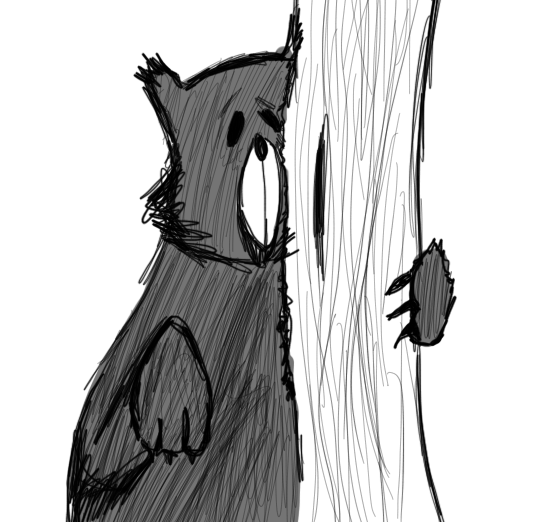
I hid behind a tree for awhile.

When I felt like it was safe to come out, I did. The chair was still broken. Its sad cracked legs were shattered. Pieces of them were scattered around the forest floor. I felt guilty.

I put the broken chair through the same process of investigation as I had the whole chair (approach, sniff, lick, sit). This was to ensure that the chair did not change its mind about not being violently reactive to something after becoming a broken chair.

It did not break again when I sat on it the second time, but it was clear that I had left a significant amount of damage from my investigation.

I like finding new things in the forest. I like investigating those new things, too, but I wish I knew a more effective, less damaging manner of doing so. I am sorry, chair that I broke. Also, I am sorry, everything else I have sat on by accident or on purpose. That includes you, the opossum who was nesting in my moss collection. It was an accident, opossum. I promise.

I just want to know more about where I live, and I hope I can learn how to do so in ways that do not leave chairs and opossums upset and/or crushed.

I am a bear.

If you would like to try being a bear, why not read some of the bear adventures available on this very site?
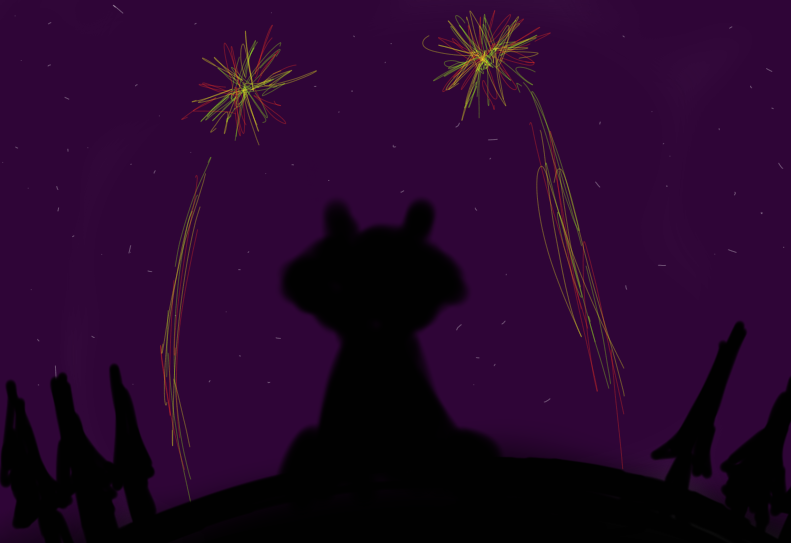
The sky is so violent but colorful.

FIREWORKS

Just the other day, the night sky was screaming in color over its own black emptiness. It was extremely alarming at first. I was sitting in my cave, rolling the rib of a rabbit skeleton on the ground as I waited for sleep, when, very abruptly, a loud crashing sound echoed through the night sky and bounced off the walls of my empty cave.

I ran outside to check what could cause such a disturbance. My first guess was thunder, a sound with which I am familiar but still keeps me awake when it is being particularly cranky. But this sound was a little different from thunder. It was more continuous. More abrupt. More colorful.

When I got outside, the popping and crashing sounds came again. More this time, too. I looked up. The sky was filled with amazing colors that are not very common in the forest. The only things that come close to these colors in the forest are reptiles in various stages of anxiety, grief, or happiness. The sounds and the colors kept coming. Straight lines of white and gold zipped into the air. Each would then burst into a cloud of smoke and sharp looking color. It was hypnotizing. It was also terrifying. Unnatural yet oddly appropriate.

This was not the first time I have seen these strange lights and sounds, though. It happens on occasion, but it always takes me by surprise. I do not know where they come from or why they are ever here. I do not know why they are still slightly terrifying. I do not know why I like them so much.

The first time I remember hearing and seeing them is a distant memory at this point. I remember that my cave was still new to me. I had just recently found it (it came with several piles of lovely moss and a mouse who eventually died one winter later). I was trying my best to be comfortable in my new habitat when the violent sounds ripped through the sky. I was so terrified that I decided to put my paws over my ears and wait for the sounds to go away. After a long while, however, I realized they were going to keep going. I decided to investigate. The colors were so foreign to me then (just as they are now, frankly). I stared all night. They eventually died down, but I stayed outside of my cave until the sun rose. For a brief moment, I was hoping that the sun, too, would shout some violent colors in the sky. It did not. It made its usual warm, glowing color and sounds.

I still have no idea what causes these strange lights and sounds. I wish I did. I wish I understood their purpose and place in the forest. Maybe one day I will go following them. I will follow the sounds and the sights. I will try to locate exactly from where they are coming. I will make a discovery and expand my understanding of something strange to me.

Or maybe I will just let them continue being a mystery. A mystery which I will take pleasure in knowing that I will never really know anything about it.

I am a bear.

If you would like to try being a bear, why not read some of the bear adventures available on this very site?

Fuzziness matters.

rubs (2)

Fuzziness is an important aspect of who I am and how I see myself as an individual creature of the forest. My ears are fuzzy. My belly is fuzzy. My neck is fuzzy. Even my paws are fuzzy, which is strange considering they are also leathery and tough. Paws are strange, but we are not here to discuss paws. We are here to discuss fuzziness.

How do I maintain the fuzziness of my fur? This is an important question for any creature who is given the gift of a thick coat of lovely hairs. I cannot speak for all creatures of the forest, but my fuzziness is maintained through a regiment of important daily processes.

Allow me to elaborate.

I spend a great deal of time every single morning rubbing my fur onto something with an interesting texture. Sometimes I seek out the smooth edges of a pebbles to help slick back my fur. Other times I look for something jagged and scratchy like the side of a tree or the side of a rusted dumpster. These rough textures also help alleviate various itches I might feel at the base of my fur. They ruffle my fur, too, making my fuzziness much more messy than usual, but the feeling of the means are worth the awkward looking ends.

I once dragged an old, ragged piece of a carpet I found into my cave. I spent a great deal of time rubbing all of my fur against it. It was one of the best things I had ever found in a dumpster, and I loved every minute I spent with my fur practically glued to its surface. Unfortunately, I eventually had to dispose of that prize after several raccoons ate most of it. I stopped them from completely devouring it, but what was left was hardly enough to maintain my fuzziness.

Water is also important part of fuzziness. Though fur smells incredible after rolling around and basking in many weeks’ worth of forest odors, it is occasionally nice to refresh and revitalize that fur with some clear, cool river water. At first, it seems counterintuitive. When fur is wet, it ceases to have fuzziness. It becomes drenched and loses everything that defines fuzzy. Once the water dries, however, the fuzziness feels crisp, clean, and brand new. I do this process minimally, though. I have a great deal of pride in the collection of smells and debris I collect as I traverse through the forest, and I do not take lightly the idea of trading all of that in just for some wet fur.

Furthermore, this process also means having to see the deer across the river. Oh, how vile that creature is with its ghastly, empty stare. It knows what it did. It will never forget what it did. I will never forget what it did.

I apologize for the digression.

Another great way to maintain fuzziness is to seek out a symbiotic relationship with another creature and/or find a very good friend. For a very long time, no less than three mice (one large one and two tiny ones) resided in a tuft of fur on my back. Their warmth and tiny hands soothed and combed my back fur. I did not let them go uncompensated, too. As often as I could, I would toss small berries or patches of grass onto the tuft by slinging them with my mouth. This beautiful relationship lasted until the tiny mice outgrew the large mouse. They ended up arguing and fighting over the rations of berries and grass. The quarrels became so terrible that their violent squeaks would keep me up at night. I finally evicted them from my body lying on my side and shaking. They quickly scattered into the forest, which was unfortunate because I would have liked to at least formally meet them before they left for good.

I sometimes ask other forest creatures if they would be willing to fill in where the mice left off, but I can find no takers. Those relationships are rare, so if you are lucky enough to find one, make sure you nurture it to the best of your abilities.

Fuzziness matters. It is not simply an issue of aesthetics either. How my fur interacts with my environment says a lot about who I am, and I truly hope all other creatures of the forest take their fuzziness as seriously as I do.

I am a bear.

If you would like to try being a bear, why not read some of the bear adventures available on this very site?

Do squirrels ever regret things? Probably not.

rob nut

Some say life is full of regret.

Not this bear’s life. My life is full of naps and acorn counting. Surely whatever woodland creature made such a negative utterance has done some terrible things or, at the very least, some things that made him/her feel terrible. While I would never claim to be Saint Bear of the Forest, I do feel that I have lived a good life thus far, and I have no plans on changing that.

It does make me wonder if maybe deep down I am not a good bear at all. Is my lack of regret actually a sign of internal villainy?

Do villains have regret for their villainous actions?

I asked Rob (the squirrel) what he thought, but he merely wrung his hands together and chuckled maniacally. It was a valid answer but not really the one I was looking for.

Rob (the squirrel), who has been known for mild villainy on occasion (mostly to ants and grasshoppers) seemed to be devoid of regret. Did we share the same moral compass? The thought perturbed me. As much as I consider Rob (the squirrel) a good friend, I did not want to be lumped into the same emotional maturity level as he. Surely he felt regret about something.

After some prodding (and light fur licking) Rob (the squirrel) said he regretted many things. He elaborated with the regalement of the time he stole seven sunflower seeds from a mouse family. They were storing them for the winter. Rob (the squirrel) felt so guilty he tried to return the seeds the following day only to discover the mouse family had been ravaged by a hungry Hawk. In the wake of this tragedy, he proceeded to eat the seeds with a clear conscious and never dwelled on the mouse family’s fate again.

I told him I didn’t think that sounded like regret.

Rob (the squirrel) shrugged his little grey shoulders, bit my nose, and scampered up a tree.

Alone, I began to dwell on my past actions. I began to wonder if there was anything I had done for which I wanted forgiveness. Did I require atonement for some past sin?

No. I couldn’t think of anything.

Either I was a sociopath or a saint. Sainthood seemed less likely. There was a third option, however: perhaps I block out every bad thing I do to protect myself from feeling regret and remorse. That was an interesting thought, but I had no memories or evidence to entertain it.

Then, like an acorn being hurled at my head from the top branch of a tree, it hit me: I did have regret that I could recall. At least a little of it.

Last week I found an ant hill ripe for eating. I remember dragging my tongue across their mount, lapping up dozens of little workers with each passing. I stood there for quite some time enjoying the spoils of my discovery.

After I thought I had my fill, I left the ant hill alone and wandered off to take a nap. When I woke up, I was hungry again. I tried to locate what was left of the ant hill, but I could not find it. Perhaps I had licked too much of it. But in reality, I felt like I didn’t eat enough ants. I wished that I had. There: that is regret.

I regret not having eaten more ants.

Suddenly, I felt better. I was comfortable in my own fur again. I had regret. Which was normal.

I wondered if I ate the deer by the river, if I would regret it later.

Probably not. He knows what he did.

I am a bear.

If you would like to try being a bear, why not read some of the bear adventures available on this very site?
 

What was before bears?

tree bearness

I have no idea what came before bears. If I had to guess, I would say lots of things. Trees seem older than bears. I bet trees were around long before bears. Maybe ants? Ants seem like they have been around much longer than bears. The sky. There is no way any bear has been around longer than the sky.

I suppose trying to figure out all of the things that came before bears is a little too grand of a task. After all, it seems like everything is older than bears, especially mold, rocks, and most frogs (their wisdom proves that). I need to narrow down my line of questioning.

What was before bears that led to bears?

I have no idea what was before bears that led to bears. I have some guesses, but that is really all they are: guesses. I do not have any hard evidence like bear bones I dug up or a lovely picture of an old bear.

Bear-trees. That is one of my hypotheses. I think it might be possible trees and bears used to be one thing at one time, a very very long time ago. I feel connected to trees in an inexplicable way. They are so silent and so peaceful and so nice about me chewing on them, collecting their stick children for further chewing, and letting me have the moss on their sides for possible chewing. Trees give. Maybe I am being too self-centered, but sometimes I feel like trees give specifically to me (and presumably all bears). That connection feels ancient. It feels like trees have been giving to bears since before bears were even bears and trees were even trees. So that leads to me thinking that maybe a very, very long time ago we were one thing.

I know this is hard to visualize, but it is very nice to think about. The peaceful, giving life of a tree is something I understand, so it makes sense to me that bears and trees might have once shared lives.

Another guess I have about what was before bears that led to bears is based around another thing that feels ancient and old to me. Dirt. Maybe bears are just fuzzy dirt. Dirt seems like it has been around for everything. Just ask it. Dirt even manages to be more silent and peaceful than trees. I have a myth in my brain that involves dirt realizing it wanted to try being more than dirt by being like all the creatures and non-dirt things that step all over it all the time. In this myth I made up, dirt decides to be a thing that is still rather silent and peaceful but gets to be fuzzy and eat fish. So some of dirt becomes the first bear. That might be me just making up stories, but would it not be so pleasant to consider it true? Maybe everything comes from dirt like that.

Trees and dirt are nice, but I do think those two ideas are more me trying to find commonality in the things I admire about the forest and less about what was actually before bears that led to bears. My practical guess for this situation that I do not truly understand is that all bears came from smaller bears. This line of thinking seems the most reasonable (and boring) to me. As much as I like to believe that I am the product of trees and dirt, I have a feeling that I am actually the product of just some other, smaller bear. A bear that is tiny and helpless and trying to figure out the forest just like I am. A bear that wants to be of trees and dirt and not an even smaller bear. A bear that likes tiny fish in tiny rivers and collects tiny rabbit skeletons. I suppose that is not so awful. It is not as magnificent as dirt and trees, but it is nice to think about a creature that is like me in every way but just tiny.

I will probably never actually know what led to bears, what was before bears, or why I feel more connected to dirt and trees than I do anything else in the forest. I like not knowing, though. It lets my brain wander into things that might or might not be, and who knows if I would be able to do that if I actually knew the answers to all of these questions.

I am a bear.

If you would like to try being a bear, why not read some of the bear adventures available on this very site?
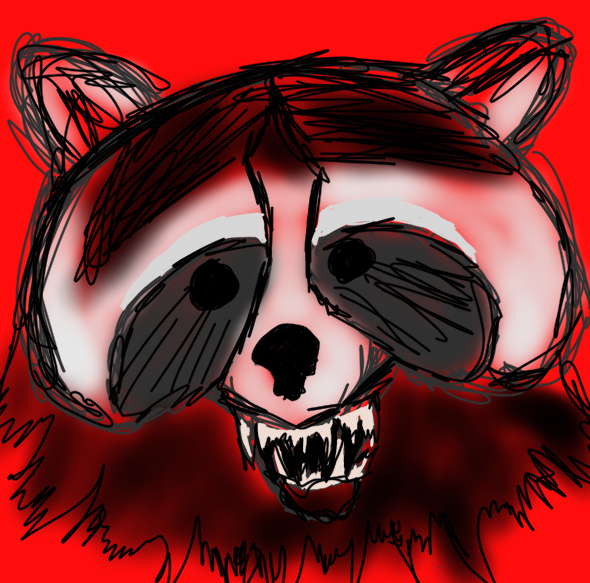
Sometimes raccoons pressure me into eating things.

demon raccoon

I like to eat most of the things I find. Leaves, cans, unidentified animal parts, flowers, leftover human things in human tents, human tents, sticks, air. Eating is one of my favorite things to do, so it is generally very easy to convince me to eat nearly anything. A raccoon I met recently proved to me there were exceptions.

It was in a dumpster behind a drug store where I found a plastic bag filled with a very dark liquid that smelled strange. I poked around it for a bit. I sniffed it. I tasted it. I even lapped a bit of the liquid into my mouth. It was sour and unpleasant. It was one of the first things I had found in a dumpster that I did not want to eat right away.

I turned around and walked away.

Right as my snout pointed toward the next direction I was going to scavenge for more eats, a raccoon startled me.

It stared me down.

It did not make a single sound.

Its bushy, striped tailed sprung up as it walked toward me. For some reason, I felt compelled to walk backward as it approached. I could have easily ignored the creature and ran into the forest, but something made me take a step back. And another step. And another. I kept creeping back as the raccoon walked nearer and nearer until my hind quarters smacked the dumpster I was originally walking away from.

The plastic bag was there. The raccoon saw it. She poked around it for a bit. She sniffed it. She tasted it. She even lapped a bit of the liquid into her mouth.

She kept lapping the liquid. Was it not sour and unpleasant to her? Why did this strange matter not bother the raccoon? Was she immune? Did she know something I did not?

Every question I had was interrupted when she turned her sharp looking face toward me with her teeth gritting, her wild sneer blinding my thoughts. She stared. I stared.

This inaction went on for a very long time. The hot sun baked the unpleasant liquid as exchanged intensity through our eyes.

Finally, the raccoon snapped her jaws around the plastic bag and dragged it toward me.

The hissing began.

I had no idea what she wanted at first. I tried to back away. More hissing. I tried to sit and continue the staring. More hissing. I tried to speak of my discomfort. More hissing.

After a great deal of trials and errors and mistakes and hissing, I figured out what the raccoon wanted.

I pushed my nose into the plastic bag. The hissing quieted. She continued to stare. I averted my eyes away from the bag and toward her. Light hissing. I put my face into the plastic bag. No hissing. The smell was awful. The taste was now sour and warm. It was terrible.

The raccoon kept staring, her glare keeping my brain frightened and my nose nestled in the bane of my senses.

Before long, the liquid was inside my belly, rumbling my insides and making me dizzy. It was gone, though. But so was the raccoon. I looked all around me, trying to figure out exactly what had happened here. Was she merely a figment of my imagination? Did my mind conjure an aggressive raccoon to make me experience something I shied away from? Why am I so afraid of raccoon hissing?

This experience left me questioning many things about my personality and what I know about the forest and its inhabitants. It also led to some of the most terrifying sounds my belly has ever made. But like with any experience, I did learn something. Raccoon sounds are fear-inducing demonic screeches that can drive you to insanity. I do like raccoons, though.

I am a bear.

“Boris the Bear’s Circus Adventure Extravaganza of Suffer for Lonely, No” is the latest adventure you can read on helloiamabear.com! Please enjoy!

I took a nap on some ants.

ants (2)

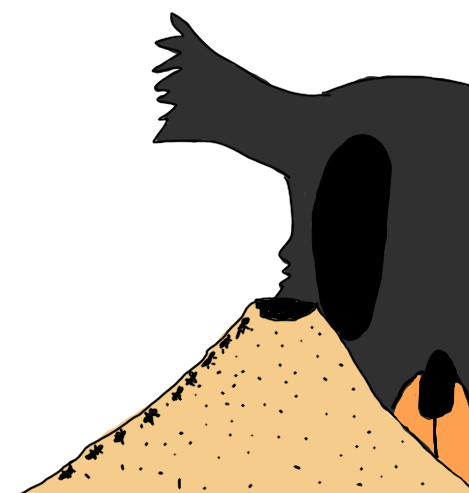
I took a nap on some ants. I did not do so out of malice. In fact, it was never my intention to sleep on ants at all. Sometimes, when spontaneous naps strike you, the number of ideal places to lay your fuzzy head dwindle. A bear (me, for example) must work with what is around them. In this case, what seemed to be comfiest place on the forest floor was an ant hill.

The tiny mound looked soft and inviting. Little did I know, my carelessness would cause a kingdom to fall.

I woke to the sound of hundreds of tiny voices crying out in terror, pining over the destruction of their home. I sat up to survey the damage. It was severe and undeniably horrible.

What had I done?

A few surviving colonists clung to my nose. Some were frantically shouting in my face. A few were biting me. But the pain they inflicted upon my muzzle was nothing compared the remorse that filled my heart.

I begged for their forgiveness, but there was none to be had. The ants could not let this atrocity go unpunished. With tears welling in my eyes, I accepted whatever fate the small insects had planned for me. There was much deliberation over what course of action to take.

After what seemed like an eternity of silence, one of the ants simply said, “You must rebuild, bear. Make right your wrongs.”

I agreed. I told them it was only fair. Reconstruction would begin immediately (after I finished my nap, of course). Tiny cries of protest ringed in my ears. Some more nose biting occurred.

Realizing I would not get to complete the grievous act that led to my punishment in the first place, I set out into the forest to find supplies. I came back with the essentials for any reconstruction

  • Leaves
  • Six sticks
  • Napkins covered in some kind of spicy sauce
  • Three ribs from a rabbit skeleton I had been saving for a special occasion
  • Dirt in an empty aluminum can that I chewed on

I placed the tools on the ground before the displaced ants.

“What’s this?” asked one of them.

Certain these ants had never encountered such items (with the exception of dirt; they seemed to be very familiar with that), I explained what they were.

One of the ants suggested they rebuild the hill themselves. It was a bit insulting. Now, I will be the first to admit I have never built an ant hill, but I suspected their structure could not have been too complex. After all, it looked like a cone dirt pillow. I had made many piles of dirt into lovely pillows for nothing more than my own enjoyment. Surely this would be no different.

I was terribly wrong.

It turned out ants are very competent builders. There was so much beneath the surface I did not understand. After trying to shove the saucy napkins into an opening of the collapsed hill, the ants told me to stop. I had done enough.

I thanked them for the opportunity to try my hand at a new trade. They did not reply kindly. Instead, they demanded I leave behind the leaves, the can full of dirt, and one of the rabbit ribs (for some strange reason).

Feeling slightly accomplished (and slightly beaten down), I trotted back to my cave to resume my nap. As the blanket of sleep began to fall over me, I wondered if other complex things in the world seemed so simple at face value. I am a bear, and inside, I am still a bear (I think). Is Rob (the squirrel) a squirrel on the inside or is his squirrelness simply a facade?  Where does the outer layer of reality stop and why can our core beings be that outer layer? Why did the ants want my aluminum can?

I woke up a few hours later, hungry. As I exited my cave to do some foraging, I stepped on a wasp nest that had fallen from a tree.

Wasps are not as complex as ants or squirrels or bears. They like to sting things. That is about it.

I am a bear.

“Boris the Bear’s Circus Adventure Extravaganza of Suffer for Lonely, No” is the latest adventure you can read on helloiamabear.com! Please enjoy!


I might be the only one who knows you can eat anything you find on the ground.

market

You can eat just about anything. It is one of the greatest joys of life in the forest. Berries, dirt, sticks, pine-cones, fish skeletons, fox carcasses, anthills, plastic cups, tents, those plastic sticks that hold up tents, hats, or even pebbles. All of those things and more. You can eat it all if you really want to.

I fear I might be the only creature in the forest who is completely aware of this fact. This thought occurred to me when I found a perfectly good aluminum can to chew on buried under some pine needles (edible) and worms (also edible). There is no way that I was the first creature to stumble upon such a wonderful gift for any stomach. It could have very easily been anybody’s wonderful gift for their respective stomachs. The can was old. It was crushed and covered in hard dirt (which was also edible).

This can had been seen. It had to have come in contact with someone (or someones) who eats things.

So why did I find it before those other someones? Why was it not consumed prior before I got to it? This is not an uncommon occurrence, either. I frequently find these kinds of treasures throughout the forest. Untouched gifts that I gather and feast upon in my cave. Am I truly the only one who spends nights in a cave, enjoying the fruits of a bountiful foraging expedition? Does nobody else in the forest find the nutritional value in the brown paper bag I found caught on the limb of a tree, tattered and torn and likely delicious?

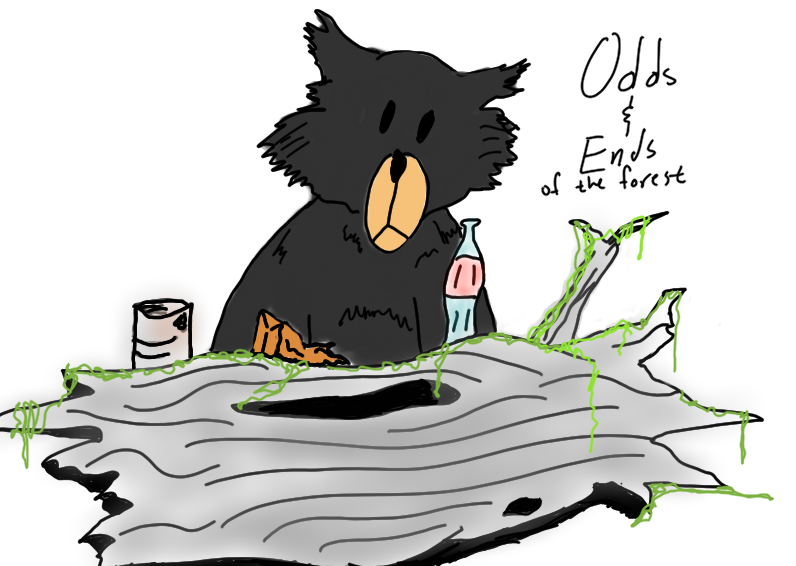
I decided I would try to spread the word of these limitless gifts. Using a moss covered, hollowed out log I found near my cave as a table, I setup a shop that displayed the numerous wonders the forest had to offer. For free, any creature was welcomed to approach my display, ask about an item, and take it back to his/her den.

As I waited for other forest inhabitants to take a gander at my wares, I accidentally ate many of them. At first, I had displayed a fish skeleton, a small bushel of red berries I had never seen before, the aforementioned aluminum can, a glass bottle, a crumpled up paper bag, a tin can, and some sticks.

By the time the first creature arrived, I only had the glass bottle, the tin can, and the paper bag left. She was a raccoon. She must have been in the log the entire time. I had not seen her enter or exit my makeshift table before then. She slowly shuffled out of the log and climbed to the top.

She sniffed the tin can.

She pushed it with her tiny paws.

Then she grabbed it with her teeth and ran away.

Success! I had convinced a fellow forest friend to partake in the wonders of forest foraging. She did not have anything to say about the can other than the distant hisses I heard from the direction she ran toward, but I was still excited at the idea of spreading awareness.

I waited a little while longer for any other forest creatures who wanted to be enlightened. Eventually, the wind picked up the paper bag and carried it off. I had not considered that even elements of the forest might like to enjoy what the forest had to offer. Perhaps the rain would like to try the glass bottle?

I wanted to ensure any creature or thing in the forest who wanted to see my findings could be able to, so I decided to stick around long after my inventory was down to just one glass bottle. I waited for a very long time. To pass the time, I chewed on the moss (another amazing thing to eat in the forest) that covered the old log. Surely there had to be something or someone out there who wanted to hear what I had to share about the forest.

Nobody came. The moon was overhead as I picked up the empty bottle and carried it to my cave. I wanted to spread awareness, which I did to a small extent, but I was saddened to realize very few animals of the forest were interested in what I had to say.

I wanted to help my fellow forest dwellers, but I hardly made an impact when it came to sharing my ideas. I should have been delighted. After all, if nobody wanted to eat the old wallet I found in an abandoned tent, did that not just mean more for me? Yet I could not get over how unheard I felt. I had something to say, but nobody wanted to listen. Even the raccoon did not stay long enough to hear why I had a display of tin cans and paper bags.

I keep a rock in my cave. It rests in the darkest part of my dwelling. When I feel like I have not been heard or when I need to say something that I cannot tell anyone, I tell my rock. I dropped the empty bottle next to the rock and explained how useful item was. I told my rock that it had a wonderful taste and smelled like mold. Then I told my rock about the raccoon and the wind. Then I explained how I felt not being listened to by anyone else.

I think the rock understood. I left the bottle next to it and curled up in a ball to sleep. It is nice to be heard, even by rocks.

I am a bear.

To read more thoughts from this particular bear, interact with the blue or grey parts of this sentence. Also, be on the look out for a new bear adventure.

I think it is okay to not be good at some things.

shame

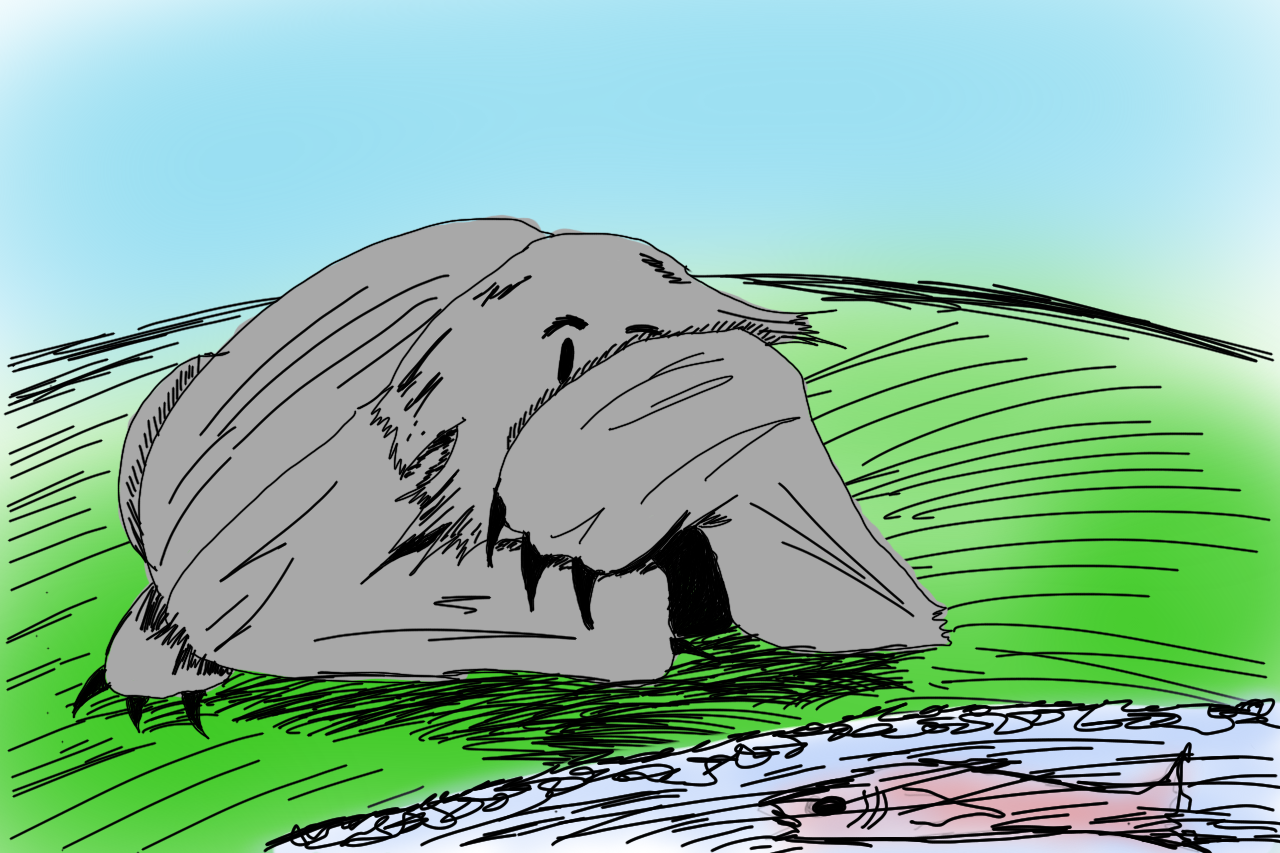
I remember the first time I caught a fish in the river near my cave. I sat in front of the rushing liquid, watching ripples and bubbles caused by the creatures below. I stared for what felt like lifetimes. My front legs were drenched in river water and bits of dirt and grass. I knew the fish were unaware of my presence, but I still felt them mocking me and telling me how terrible I was at fishing, staring, understanding water, and being a bear. They never said anything of the sort, but I felt them think it.

My paw finally swiped one of the mocking fish. I felt its head crush under the thick padding of my paw. I dragged it toward me. For a split second, I felt awful for so swiftly ending another creature’s life, but I was far too hungry to dwell on the thought for too long.

I managed to fish. I was awful at it. I am still not too terribly good at it. It still takes me far too long to time my paws with the rush of the river. I still frequently find myself tripping into the water, scaring all of the fish away.

I am not good at fishing.

I am not good at a lot of things. I try many activities to pass the time in the forest, but I rarely find myself mastering any one of them. I still struggle with identifying bird calls. I am terrible at walking backwards. I usually fail to keep my fur shiny and smooth. I have a very hard time acquiring the proper footing to extensively climb trees.

I am not good at so many things.

When I am alone, being a bear by myself and the like, I am not bothered by my lack of expertise or mastery. Even though I certainly aspire to be good at things and spend a fair amount of time practicing said things, I am okay with my inability to enhance my skillset.

When I am not alone, however, being a bear with others around and the like, I am bothered by my lack of expertise.

Everyone else seems amazing at everything.

I stare in amazement as squirrels zip up trees with great agility. My jaw drops when I witness a bird of prey swoop down into the forest to snatch its meal. I am constantly impressed by the beauty and elegance exhibited by does as they graze the forest floor.

They are so good at eating grass.

And I will never be good at eating grass. At least not that good. I usually throw up when I eat grass. I am bad at eating grass.

It troubles me to be surrounded by expertise that I am not capable of acquiring myself. I want to be good at climbing, finding prey, and eating grass, but I simply am not. I once tried to ask a doe how she got so good at eating grass, but she quickly ran away as I approached. I am sure she would have told me the obvious, though: practice.

And I do. I practice many things, but I never feel like I have mastered any of it. I want to impress others in the forest. I want animals to see me and be amazed by my capacity to be a bear and do bear things. “There goes a bear,” the creatures would say. “He is marvelous at being a bear and doing the thing we are watching him do.”

I wonder what I look like while doing the things I practice on a daily basis. How do ants see me as they witness me try to eat grass? What do the lizards on the trees I climb think about me as I straddle the flimsy limbs and try not to fall? Is anyone impressed by the way I nap in my cave for many hours at a time? I feel like nobody is.

I want to be good at things. I want to be an expert at fishing and swimming and sleeping and eating. I want to, but I do not know if I ever will be. But whenever I find myself dwelling on that want of being a master of anything, I try to think about why I want it so bad.

Do I want to be good at fishing so I can catch fish easier? Not really. I do not mind being bad at catching fish. I really just like swishing my paws through the cool river water. I suppose I want to be good at fishing so others can be impressed by my ability to fish. Does it matter if others are impressed by me, though? Would it make my days easier or the grass on the ground tastier? I doubt it, yet I still crave it.

I need to be okay with what I am capable of. I need to embrace the bear that I am and not be ashamed of the bear I think others see. I need to do these things, but it is difficult. For now, I will keep trying to be a better bear while accepting that I might not ever be the impressive bear I want to be. I think that is okay.

I will also try to eat more grass without throwing up. I like to eat grass.

I am a bear.

To read more thoughts from this particular bear, interact with the blue or grey parts of this sentence.

Do not yell at trees.

tree bear

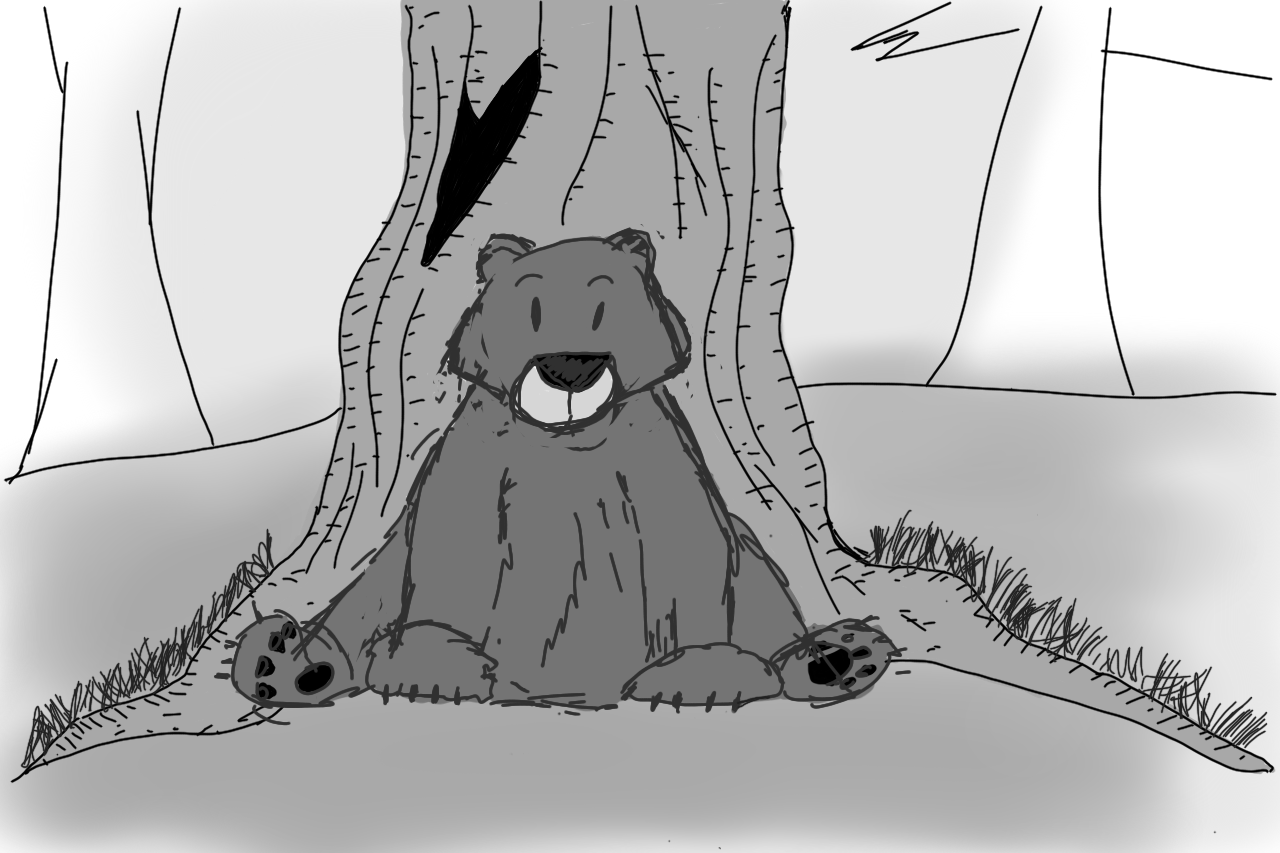
You should not yell at trees for many reasons. First, and most importantly, they do not like it. While they have never vocalized this, I am eighty-four percent certain it is not a pleasant experience for them. Would you like to be yelled at? Of course not, and you are not even a tree.

If you would, for just a moment imagine being a tree: You are in the middle of a great forest surrounded by your brothers and sisters. A network of wildlife uses your body as a home and/or food source. You produce offspring and help the forest grow denser. You give shade to those who are too large to inhabit you. Some animals use you to mark territory or get rid of waste. Humans often deface you with strange carvings or, in horrible situations, try to take you out of the forest in cylindrical slabs. You have no defense mechanisms, but you must be strong at all times.

Despite being quite impressive and majestic, you are under constant duress to be something to everything.

Now that you are an imaginary tree and can empathize with the plight of trees, picture someone yelling at you. Perhaps your leaves were blown off your branches (something you had no control over) and they landed somewhere someone did not want them to land. Maybe your sap got on someone’s fur. Maybe someone just does not enjoy the texture of bark. Now, how would you feel if this hypothetical someone yelled at you for any of these reasons? Would you need that sort of pressure on top of all the other things you have going on in your life? Of course you would not.

The act of yelling at trees is simply pointless. It does not accomplish anything. You might think that yelling at a tree could be cathartic, but it does not make you feel any better. I know from first-paw experience.

I once tripped and tumbled, head first, into the base of an oak tree. Once I got to my feet, I loudly growled at the tree and asked why it felt the need to strike me. After a moment of silence, I felt ashamed for blaming the tree for my misfortune. After all, I was the one who tripped and tumbled. The tree had always been there. The same place. A constant for the forest. I was the one running about, causing unpredictable chaos. I tripped because of me.

What could I have expected from the tree anyway? If the absurd assumption that the tree was at fault was even remotely true, what could the tree do? No tree has never apologized (not that an apology from a tree has ever earnestly been needed), and this tree was not about to be the first to do so. My whiny howling did not deserve any response beyond what it received: just silence (or just the soft rustling of leaves in the wind).

Rob (the squirrel) once told me he yelled at a tree. He claimed that a tree had tried to run him over while he was crossing a street. I had no idea how or why a tree could or would do that. I also was not completely sure what a street was, but I did know that no tree could ever intentionally, upon its own will, do something so malicious.

I asked Rob (the squirrel) if yelling at the tree had made him feel better. He admitted it had not. He also admitted that the thing that had tried to run him over was likely not a tree. He then seemed embarrassed, which led to him hurling an acorn at my nose and running away. Even Rob (the squirrel), who is characteristically aggressive, blameless, and unashamed by nature, could not place blame on a tree.

Trees are your friends. Even if one falls over and smashes something you love, it is not the tree’s fault. They did not ask to be horizontal. In fact, I am seventy-six percent sure they abhor being anything but vertical. Unless you enjoy pointless acts and looking quite silly, please, do not yell at trees. There are better ways to spend your time.

I am a bear.

To read more thoughts from this particular bear, interact with the blue or grey parts of this statement. It would be fun.